Ingredients · 7 min read · July 30, 2026
Best kava gummies: how to pick noble kava (and what to avoid).
Not all kava is the same plant material. Here's how to read a kava label before you buy.
Kava has been consumed in the South Pacific for centuries as a social, calming drink. The gummy format is new, and it's brought a wave of products where the word 'kava' on the front tells you almost nothing about what's inside. The difference between a good kava gummy and a bad one comes down to four label details.
1. Noble kava, not tudei
Kava cultivars fall into two broad groups. Noble varieties are the ones with the long traditional-use record — pleasant, relatively short-acting, and well tolerated. Tudei ('two-day') varieties are cheaper, higher in the kavalactone dihydromethysticin, and associated with lingering next-day heaviness and nausea. Traditional growing regions restrict or ban tudei for export precisely because of this.
A label that just says 'kava root extract' is not telling you which one you're getting. Look for the word noble, explicitly.
2. Kavalactone percentage, not just extract weight
Kavalactones are the active compounds. '100mg kava extract' means very little on its own — a 10% extract and a 30% extract at the same milligram weight deliver wildly different amounts of active material.
The number to find is the standardization: a 30% kavalactone extract at 100mg gives you 30mg of kavalactones per piece. Traditional servings sit in the range of roughly 70–250mg of kavalactones, which is why serving size matters as much as per-piece dose.
3. Root only
Traditional preparation uses the peeled root and rootstock. Aerial parts — leaves and stem peelings — contain compounds not present in the traditional beverage and are widely considered the likely culprit in the liver-safety concerns raised in the early 2000s, when some European extracts used whole-plant material and harsh solvents.
Water-extracted, root-only noble kava has a long safety record. That's the specification worth insisting on.
4. Onset, duration, and what it actually feels like
Kava is not a sedative in the way melatonin or a sleep aid is, and it is not intoxicating. Most people describe a physical loosening in the shoulders and jaw, a slight lift in mood, and easier conversation — clear-headed calm rather than drowsiness.
In gummy form, effects usually start within 15–30 minutes, peak around an hour, and taper over the following hour or two. Because gummies dissolve in the mouth, some people notice the characteristic mild tongue-tingle that traditional kava drinkers know well. That's normal.
Safety rules that aren't optional
Do not combine kava with alcohol, benzodiazepines, or other CNS depressants. Avoid kava if you have liver disease or take medications heavily metabolized by the liver. Not for use during pregnancy or nursing, and not before driving until you know how it affects you.
Kava is best used situationally rather than every single day. Many regular users cycle — a few days on, a few days off.
Putting it together
The shortlist test: does the label say noble, does it state a kavalactone percentage, does it specify root, and is the per-serving kavalactone amount high enough to matter? A product that answers all four is already ahead of most of the category.
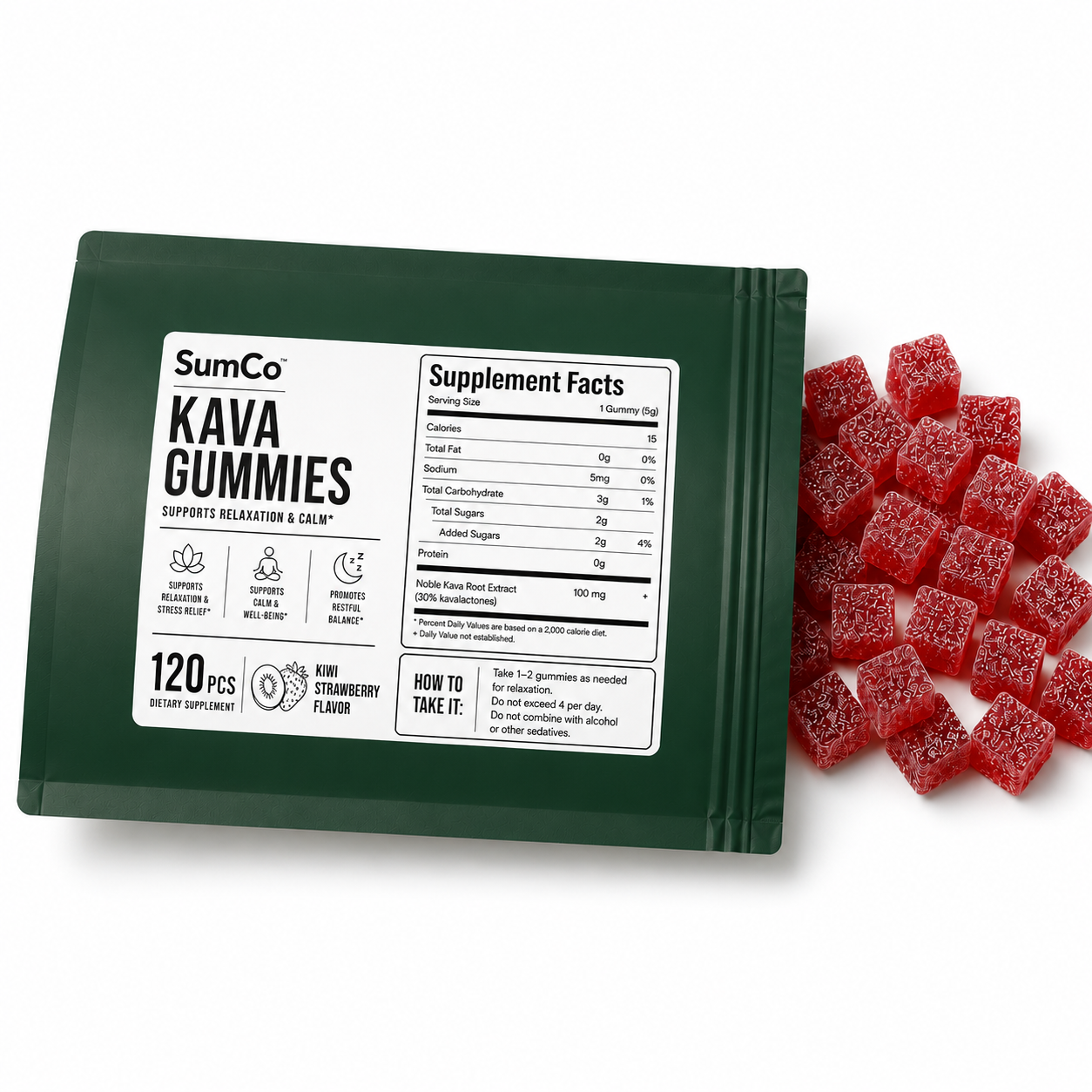
SumCo's Kava Extract Gummies use 100mg of noble kava root extract standardized to 30% kavalactones per piece, in a kiwi strawberry flavor, with the full panel on the label.
Common questions
- What are the best kava gummies?
- The best kava gummies specify noble kava, state a kavalactone percentage (commonly 30%), use root-only material, and deliver a meaningful kavalactone dose per serving. Any product missing one of those four details is asking you to guess.
- How many kava gummies should I take?
- Start with one and wait an hour. Traditional servings land around 70–250mg of kavalactones; at 30mg per piece, most people find their comfortable range within the first few uses.
- Do kava gummies make you sleepy?
- Usually not at typical doses. Kava produces relaxation and sociability rather than sedation, though larger amounts can feel heavier.
- Is kava safe for the liver?
- Root-only noble kava has a long record of safe traditional use. The historical concerns involved whole-plant material and solvent extraction. Avoid kava entirely if you have liver disease or take medications processed heavily by the liver.
- Can I take kava with alcohol?
- No. Do not combine kava with alcohol or other CNS depressants — the interaction is poorly characterized and increases risk.