Ingredients · 6 min read · September 9, 2026
Magnesium citrate vs glycinate: which one for sleep and relaxation?
Two of the most recommended magnesium forms, compared honestly — including the trade-off nobody mentions.
Magnesium is one of the few supplements where the form on the label changes the experience more than the number of milligrams does. Citrate and glycinate are the two forms most often recommended for sleep and relaxation, and the internet tends to declare one of them the winner. The real answer depends on what you want it to do besides help you unwind.
Why the form matters at all
Magnesium is a mineral, and minerals aren't absorbed as bare atoms — they're bound to a carrier molecule. That carrier determines how much magnesium actually crosses into your bloodstream, how it feels in your gut, and how much elemental magnesium you get per milligram on the label.
This is also why label reading gets confusing. "400mg magnesium citrate" and "400mg elemental magnesium" are very different claims. The first includes the weight of the citrate.
Magnesium citrate
Citrate is magnesium bound to citric acid. It's one of the better-absorbed common forms, considerably more bioavailable than magnesium oxide, and it's inexpensive and well studied.
Its signature trait is a mild osmotic effect in the gut — it draws water into the intestine. At higher doses that's precisely why citrate is used as a gentle laxative. At the modest doses used in sleep formulas, most people never notice it, and some people with sluggish digestion consider it a bonus.
Magnesium glycinate
Glycinate is magnesium bound to glycine, an amino acid that is itself mildly calming. It's very well absorbed and notably gentle on the stomach, which is why it's the usual recommendation for people who want a large magnesium dose without digestive consequences.
The trade-off is bulk. Glycine is heavy relative to the magnesium it carries, so the elemental magnesium per gram of ingredient is lower. Hitting a meaningful dose takes more raw material — fine in a capsule, awkward in a gummy where every ingredient competes for space with texture and taste.
Which is better for sleep?
Both help, and the mechanism is the same: magnesium supports the nervous system pathways involved in relaxation, and correcting a low intake tends to improve sleep quality. Neither form is a sedative, and neither will knock you out.
Glycinate has a small theoretical edge because glycine has calming effects of its own. Citrate has a practical edge on absorption per unit of ingredient and on cost. In a formula where magnesium is one supporting player rather than the whole product, that practical edge matters more than the theoretical one.
Why our sleep gummy uses citrate
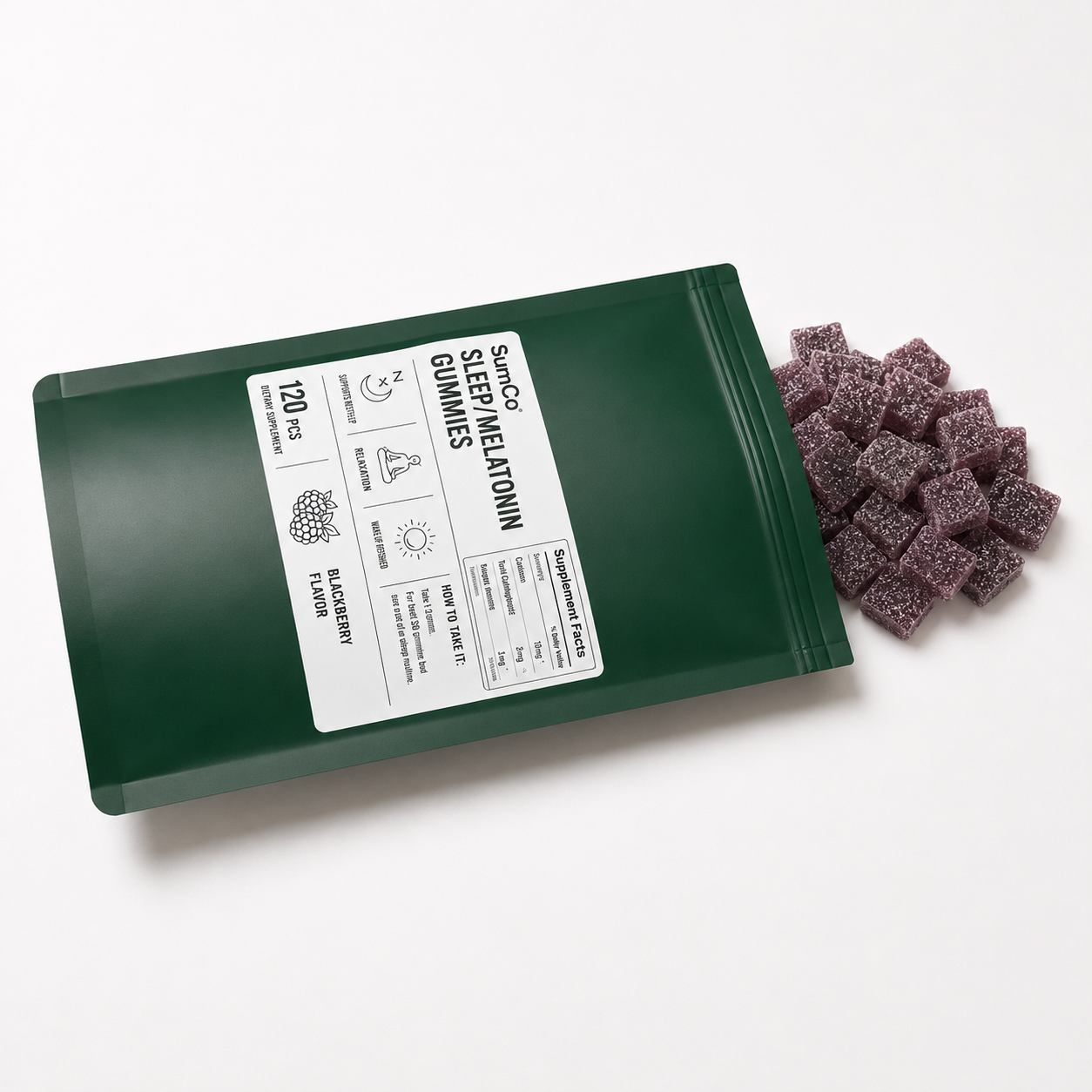
Our melatonin sleep gummy carries 75mg of magnesium citrate alongside 1mg melatonin, 50mg apigenin, and L-theanine. Citrate lets us deliver real, well-absorbed magnesium in a gummy without either blowing out the size of the piece or resorting to magnesium oxide, which is cheap and poorly absorbed.
At 75mg, the osmotic effect is negligible for the overwhelming majority of people. If you specifically want a full 200–400mg magnesium dose for other reasons, that belongs in a dedicated magnesium supplement — probably glycinate, probably a capsule — not in a sleep gummy.
How to choose
If you want a large daily magnesium dose and have a sensitive stomach, glycinate. If you want good absorption at a sensible cost, or you don't mind a mild digestive nudge, citrate. If a label says only "magnesium" with no form named, or names oxide, that's the one to skip.
And check whether the number on the front is elemental magnesium or the weight of the compound. That single detail explains most of the confusion in this category.
Common questions
- Is magnesium citrate or glycinate better for sleep?
- Both work through the same relaxation pathways. Glycinate is gentler on the stomach at high doses and glycine is mildly calming; citrate is well absorbed and more efficient per milligram of ingredient. For the modest dose used in a sleep formula, the difference is small.
- Will magnesium citrate upset my stomach?
- At laxative doses it can. At the 75mg used in our sleep gummy, almost nobody notices. Digestive effects from citrate scale with dose.
- How much magnesium do I need for sleep?
- There's no established sleep-specific dose. Most sleep research uses supplemental magnesium in the low hundreds of milligrams, usually to correct an inadequate intake. In a combination formula, magnesium supports the other ingredients rather than carrying the effect alone.
- Can I take magnesium and melatonin together?
- Yes — they're commonly combined, and they work on different parts of the problem. Melatonin signals timing while magnesium supports relaxation.
- Which magnesium form should I avoid?
- Magnesium oxide is the one to be skeptical of. It shows a big number on the label and is absorbed poorly, so the delivered dose is far lower than it looks.