Ingredients · 6 min read · August 7, 2026
Melatonin gummies for adults: dose, timing, and grogginess.
Most melatonin gummies are dosed far above what the research supports. Here's what the studies actually show.
Melatonin is the most-purchased sleep supplement in the country and one of the most misunderstood. It isn't a sedative, more isn't better, and the timing matters at least as much as the dose. If you've tried a 10mg gummy and woken up foggy, the problem probably wasn't melatonin — it was how much of it you took, and when.
Melatonin is a timing signal, not a sedative
Your body starts releasing melatonin a couple of hours before your natural bedtime. It doesn't knock you out; it tells the rest of your system that night has started. Supplemental melatonin works the same way — it shifts the timing of your sleep window rather than forcing sleep.
That's why it helps most with jet lag, shift work, and a sleep schedule that has drifted late, and helps least with the kind of insomnia driven by stress or pain.
How much melatonin do adults actually need?
Clinical trials that show a benefit typically use somewhere between 0.5mg and 5mg. Higher doses do not reliably produce better sleep, and several studies find the low end works as well or better for shifting sleep timing.
Retail gummies commonly deliver 5mg or 10mg — often more melatonin in one piece than your body produces in an entire night. That overshoot is the single most common reason people report morning grogginess.
Timing beats dosage
Take melatonin roughly 30 to 60 minutes before the bedtime you're aiming for, not the bedtime you currently have. If you're trying to move your schedule earlier, take it earlier and keep the lights low afterward.
Bright screens after dosing work directly against the signal you just sent. Dimming lights for the last hour does more for sleep onset than adding milligrams.
Why you wake up groggy
Melatonin has a short half-life, but at high doses enough remains in circulation at 7am to leave you feeling heavy. The fix is almost always to cut the dose rather than to stop entirely — many people who feel foggy on 10mg feel fine on 1mg.
The other common cause is dosing too late. Taking melatonin at 1am for a 7am wake-up compresses its effect into your morning.
What pairs well with it
Magnesium citrate supports muscle relaxation and is generally well tolerated at night. L-theanine reduces the mental churn that keeps people awake without sedating them.
A sleep formula built on a modest melatonin dose plus those two ingredients tends to feel gentler than a high-dose melatonin gummy on its own.
Who should be careful
Melatonin is generally well tolerated, but it interacts with blood thinners, immunosuppressants, and some blood pressure and diabetes medications. If you're pregnant, nursing, or taking prescription medication, talk to your doctor first.
It's also not meant for nightly indefinite use without a reason. If you need it every night for months, the underlying sleep issue is worth investigating.
Practical takeaway
Start at the lowest dose that works, take it 30–60 minutes before your target bedtime, and keep the lights down afterward. Increase only if the low dose genuinely does nothing after a week.
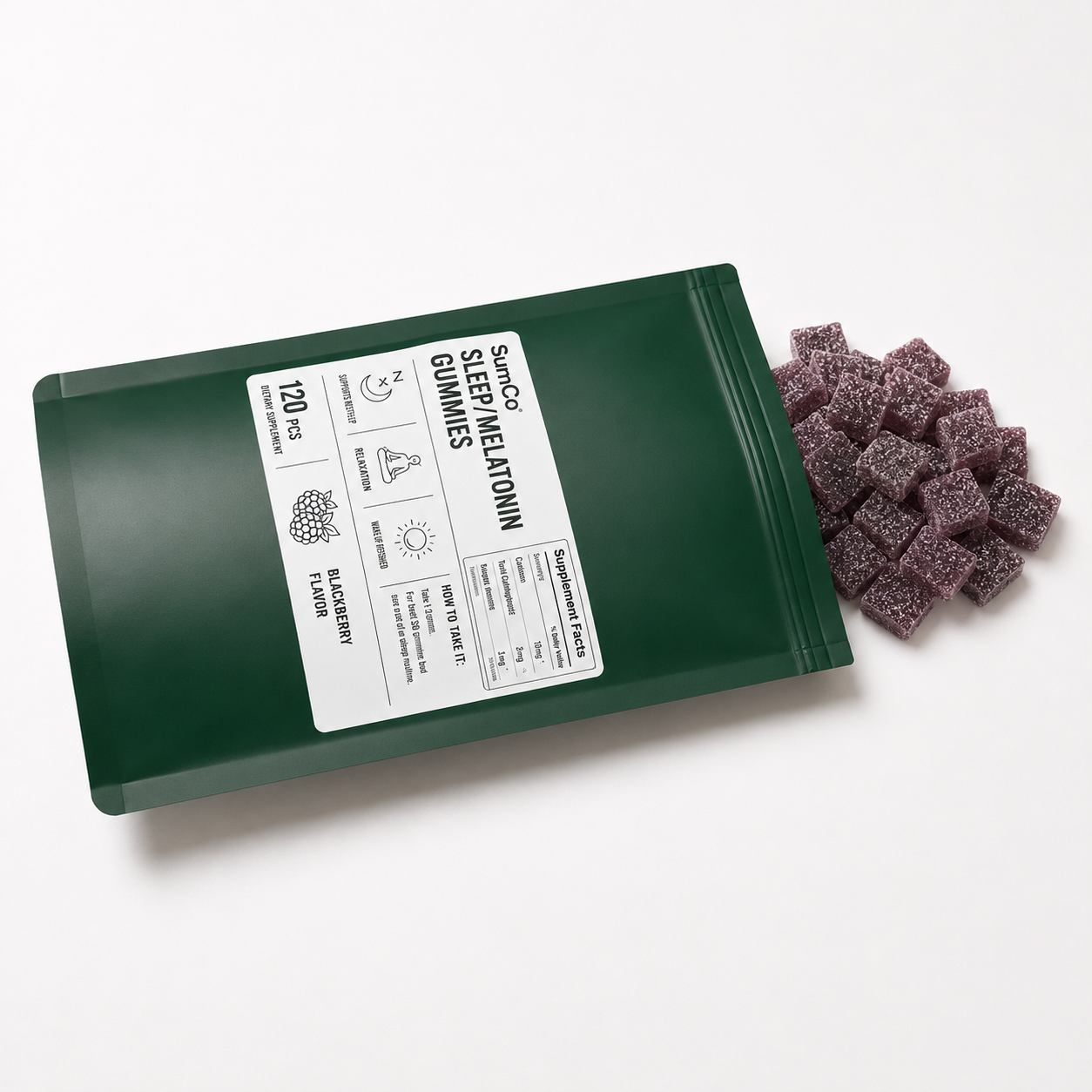
SumCo's Melatonin Sleep Gummies use a restrained melatonin dose alongside magnesium citrate and L-theanine, with every amount printed on the label.
Common questions
- How much melatonin should an adult take?
- Most clinical evidence supports 0.5mg to 5mg. Higher doses don't reliably improve sleep and are the most common cause of morning grogginess, so starting low is usually better.
- When should I take a melatonin gummy?
- About 30 to 60 minutes before the bedtime you're targeting. Keeping lights dim after taking it matters as much as the dose itself.
- Why do melatonin gummies make me groggy the next day?
- Usually the dose is too high or taken too late. Many people who feel foggy on 10mg feel fine on 1mg, and dosing earlier in the evening helps.
- Can I take melatonin gummies every night?
- Short-term nightly use is common and generally well tolerated, but melatonin is best used to shift or reset a sleep schedule rather than indefinitely. Persistent insomnia is worth discussing with a doctor.
- Do melatonin gummies work for jet lag?
- This is where melatonin performs best. Taking it in the evening of your destination time zone helps shift your internal clock faster than adjusting on your own.