Ingredients · 6 min read · September 9, 2026
Apigenin for sleep: what it is, how much, and how it compares to melatonin.
The calming flavonoid behind chamomile tea — and why we put 50mg of it next to a low melatonin dose instead of raising the melatonin.
Most sleep supplements answer one question: how do I fall asleep faster? Melatonin is good at that and bad at almost everything else. Apigenin sits on the other side of the problem — settling the mental noise that keeps you awake in the first place. Here's what it is, how much we use, and how the two work together rather than competing.
What apigenin actually is
Apigenin is a flavonoid — a plant compound — found in chamomile, parsley, celery, and a handful of other foods. It's the part of chamomile tea most often credited with the calm-before-bed feeling, which is why chamomile extract shows up in so many sleep formulas.
The problem with chamomile extract is that its apigenin content varies widely by supplier, harvest, and extraction method. You can be handed two extracts with the same label and get very different amounts of the compound that matters. Using apigenin directly removes that guesswork.
How it works differently from melatonin
Melatonin is a timing signal. It tells your body what time it is, which is why it's genuinely useful for jet lag and shifted schedules and much less useful for a racing mind at 1am. Raising the dose doesn't make it work harder; it mostly makes the next morning worse.
Apigenin works on the calming side. It interacts with GABA-A receptors — the same broad system targeted by prescription sedatives, though far more gently — which is why it's described as anxiolytic rather than hypnotic. It's not knocking you out. It's lowering the volume so sleep can happen.
That difference is the whole reason to combine them. A small melatonin dose sets the timing, apigenin and magnesium quiet things down, and nothing in the stack needs to be overdosed to do its job.
How much apigenin, and why 50mg
Human research on isolated apigenin is still young; most of the sleep and anxiety literature uses chamomile extracts standardized to apigenin, at doses that translate to roughly 25–100mg of the compound. Below about 25mg, most people report nothing at all.
We use 50mg per serving — comfortably inside that range, and a great deal more apigenin than you'd get from a cup of chamomile tea, which typically delivers a few milligrams at best.
What it feels like
Apigenin is subtle. People describe it as the mental chatter dropping off rather than a wave of drowsiness. If you're expecting the heavy, weighted feeling of a 10mg melatonin gummy, it will feel like nothing is happening — right up until you notice you fell asleep without lying there rehearsing tomorrow.
It also doesn't produce the grogginess pattern melatonin is known for. That's not a guarantee for everyone, but it's the most common report, and it's a reasonable consequence of a compound that calms rather than sedates.
Where it sits in our sleep gummy
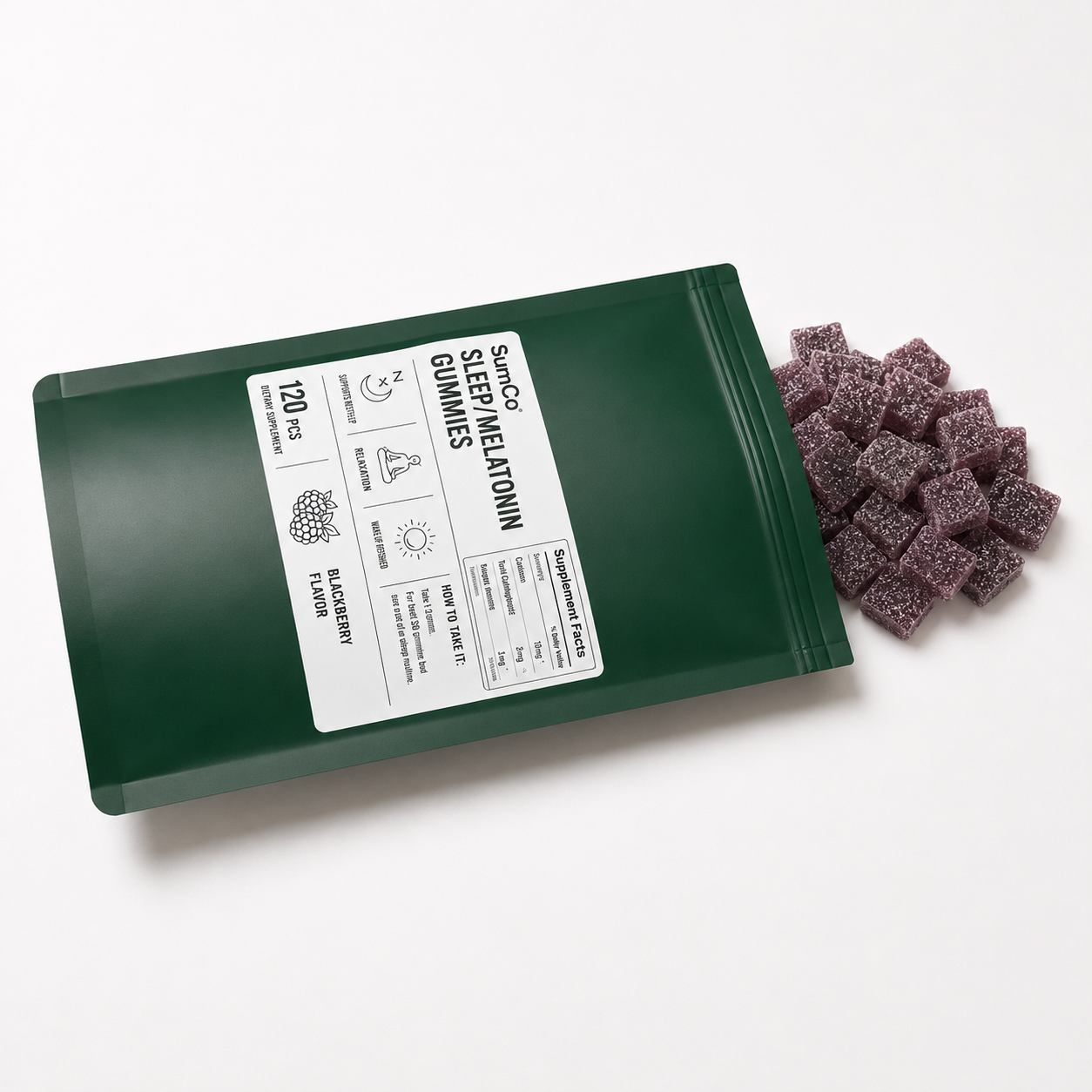
Our melatonin sleep gummy pairs 1mg of melatonin with 50mg apigenin, 75mg magnesium citrate, and L-theanine. The melatonin dose is deliberately low — the goal is a nudge to your clock, not a sledgehammer — and the rest of the formula handles the calm.
That's the opposite of how most sleep gummies are built, where melatonin is dosed at 5 or 10mg and everything else is a garnish.
Who should be careful
Apigenin comes from the same plant family as ragweed, so anyone with a chamomile or ragweed allergy should avoid it. It may also interact with blood thinners and sedatives, and there isn't good safety data in pregnancy or breastfeeding.
As with anything on this site: talk to your doctor if you take prescription medication or have an ongoing sleep problem. A supplement is a poor substitute for a diagnosis.
Common questions
- Is apigenin better than melatonin for sleep?
- They solve different problems. Melatonin shifts your body clock, which makes it strong for jet lag and late schedules. Apigenin calms mental activity, which helps when you're tired but wired. Most people do best with a low melatonin dose plus apigenin rather than either alone.
- How much apigenin should I take for sleep?
- Research using chamomile extracts standardized for apigenin generally lands in the 25–100mg range. We use 50mg per serving, which sits in the middle of that window.
- Is apigenin the same as chamomile extract?
- No. Apigenin is the individual flavonoid; chamomile extract is a mixture that contains a variable amount of it. Dosing the isolated compound means you know exactly what you're getting.
- Will apigenin make me groggy in the morning?
- It usually doesn't, because it calms rather than sedates. Morning grogginess in sleep supplements is more commonly tied to a high melatonin dose or taking it too late at night.
- Can I take apigenin every night?
- There's no established reason it needs cycling, and it's not habit-forming in the way sedatives are. Still, ongoing insomnia deserves a conversation with a doctor rather than an indefinite supplement.