Education · 6 min read · September 9, 2026
Lion's mane vs caffeine for focus: which one, and when.
One works today, one works in six weeks. Picking the wrong one is the most common focus-supplement mistake.
Ask for a focus supplement and you'll usually be pointed at either caffeine or lion's mane. They get shelved together and they do almost nothing alike. One is an acute stimulant with an effect you can feel within half an hour; the other is a slow structural play measured in weeks. Knowing which problem you actually have decides which one is worth your money.
Caffeine: the acute lever
Caffeine blocks adenosine, the molecule that accumulates through your waking hours and makes you feel tired. It doesn't create energy; it hides fatigue and raises alertness, reaction time, and perceived motivation. It's among the most thoroughly studied performance compounds in existence and it reliably works.
Onset is roughly 20–45 minutes, peak around an hour, and the half-life is about five hours — which is why an afternoon dose still has a foot in your evening. Tolerance builds within weeks of daily use, and stopping abruptly brings a headache and a few flat days.
Lion's mane: the slow lever
Lion's mane is a mushroom whose compounds — hericenones and erinacines — are studied for their influence on nerve growth factor, a protein involved in maintaining and repairing neurons. The interesting research is about cognitive support over time, not alertness right now.
The best-known human trial ran for 16 weeks and measured improvement in cognitive scores that faded after supplementation stopped. Most people who report a benefit describe it appearing somewhere between three and eight weeks in, and describe it as clarity or smoother word recall rather than stimulation.
If you take lion's mane expecting a caffeine-like lift on day one, you will conclude it does nothing. That's a mismatch of expectations, not evidence.
Head to head
For a deadline this afternoon: caffeine, without hesitation. Nothing in the nootropic category matches it for immediate, dependable alertness.
For the sense that your mental sharpness has been slipping over months: lion's mane is the more sensible experiment, and it needs a fair trial of at least six to eight weeks before you judge it.
For jitters, an afternoon crash, or a racing heart from your current coffee habit: neither. That's a caffeine-dosing problem, and the fix is a smaller, better-buffered dose.
Why L-theanine keeps showing up next to caffeine
L-theanine is an amino acid from tea leaves that takes the edge off caffeine's stimulation without dulling the alertness. The combination has been studied repeatedly for attention and it's the reason a strong green tea feels cleaner than an equivalent dose of coffee.
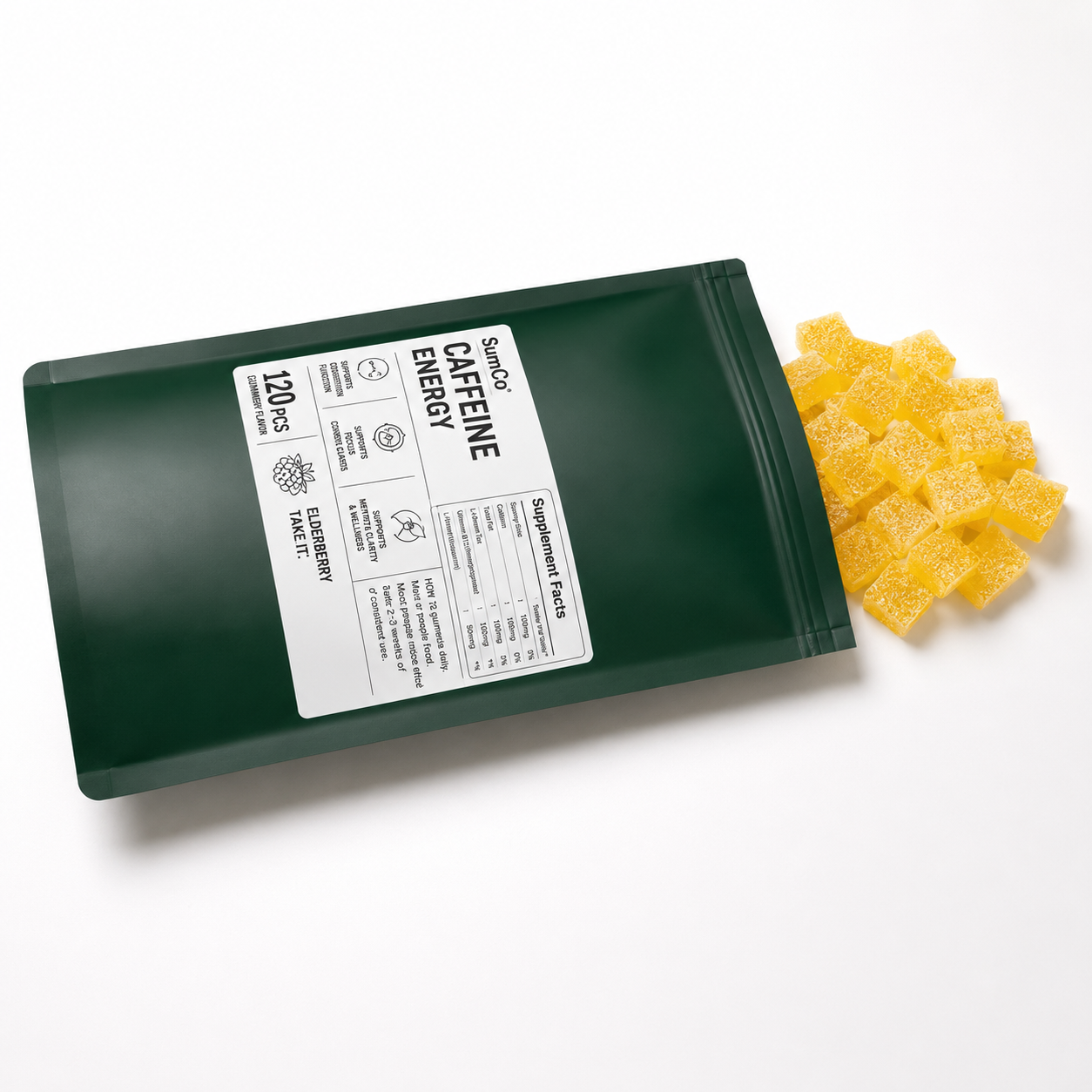
Our caffeine gummy uses green tea caffeine paired with L-theanine for exactly this reason. The point isn't the biggest possible hit of caffeine — it's the version of it you don't have to recover from.
Using both
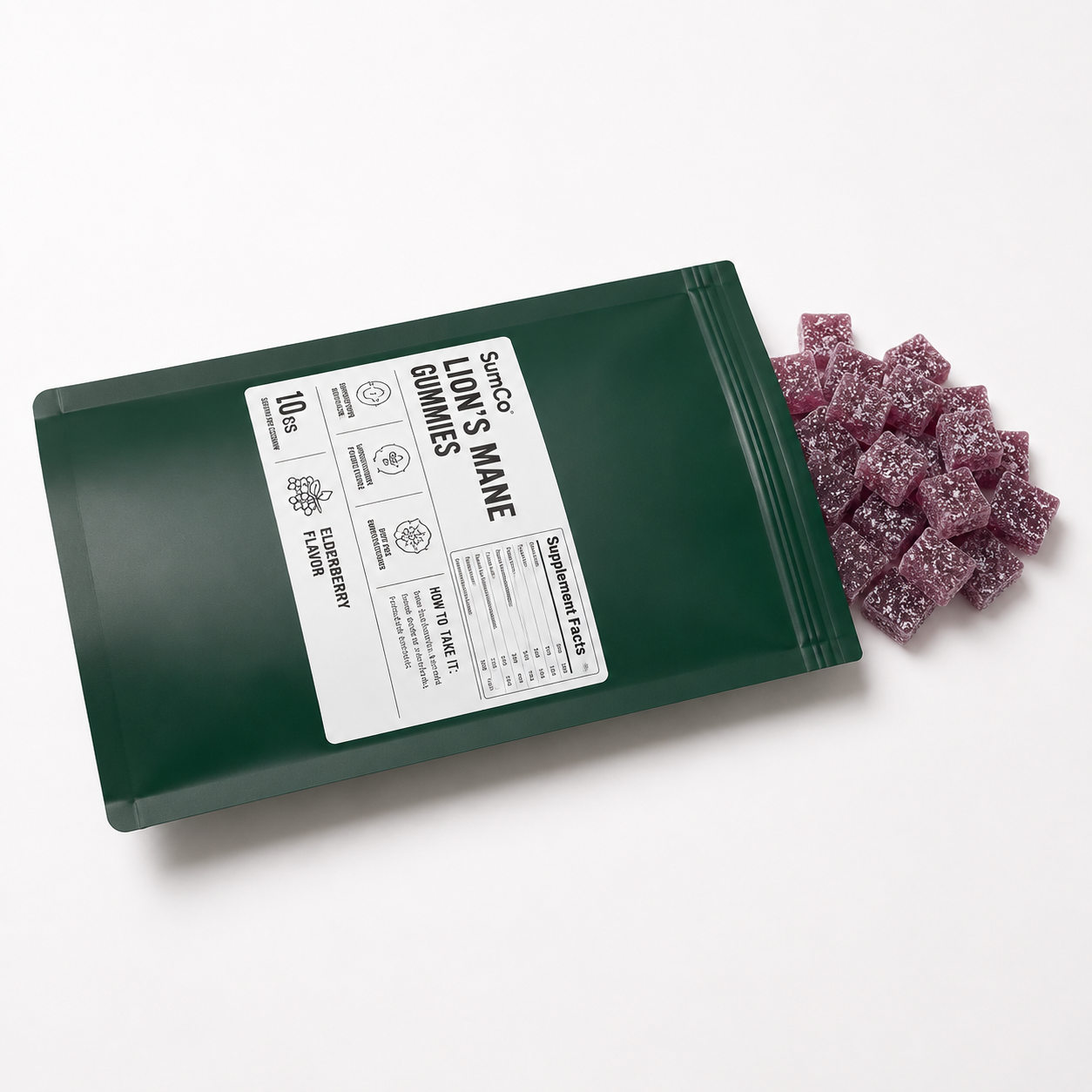
They don't compete, so there's no reason to choose. Lion's mane daily as a baseline, caffeine on the mornings you need the extra gear. That's the pattern most people land on.
Two practical notes: take lion's mane consistently, since intermittent use is what a 16-week mechanism can least afford, and keep your last caffeine dose at least six hours from bedtime. Focus supplements that wreck your sleep are a net loss the next day.
What each one won't do
Caffeine won't fix underslept. It postpones the bill and charges interest. Lion's mane won't produce a same-day effect, and it isn't a treatment for any cognitive condition.
Neither is a substitute for sleep, movement, and food — and no supplement, ours included, is intended to diagnose or treat anything.
Common questions
- Is lion's mane better than caffeine for focus?
- Neither is better; they operate on different timescales. Caffeine sharpens focus within an hour. Lion's mane is studied for cognitive support over weeks to months. The right pick depends on whether your problem is today or this year.
- How long does lion's mane take to work?
- Most reports of benefit start between three and eight weeks of consistent daily use, and the best-known human trial ran 16 weeks. It isn't something you feel on day one.
- Can I take lion's mane and caffeine together?
- Yes. They have separate mechanisms and no known conflict — daily lion's mane with caffeine as needed is a common pairing.
- Does lion's mane make you sleepy or wired?
- Neither, for most people. It isn't a stimulant or a sedative, which is why it can be taken at any time of day.
- How much caffeine is in a caffeine gummy?
- Ours delivers green tea caffeine paired with L-theanine per piece, so you can dose in smaller increments than a cup of coffee. The exact amount is listed on the product page's supplement panel.